Continuing to build a strong foundation in IT and cybersecurity requires understanding not only technical systems but also how organizations manage and deliver IT services effectively. Recently, I passed the ITIL 4 Foundation certification exam, a globally recognized certification that focuses on modern IT service management practices.
The certification validates knowledge of how organizations design, deliver, and continually improve IT services to provide value to customers and stakeholders. I passed the exam three days ago and wanted to share my experience, the resources I used to prepare, and some key concepts that stood out during my studies.
What Is ITIL 4?
ITIL (Information Technology Infrastructure Library) is one of the most widely adopted frameworks for IT service management. It provides best practices that help organizations align IT services with business goals while improving efficiency, reliability, and customer satisfaction.
The ITIL 4 Foundation certification introduces the core principles of IT service management and focuses on concepts such as:
- The Service Value System (SVS)
- The Service Value Chain
- ITIL guiding principles
- Continual improvement
- The four dimensions of service management
According to the ITIL framework, a service is defined as a means of enabling value co creation by facilitating outcomes customers want without requiring them to manage specific costs and risks.
This concept emphasizes that IT services should focus on delivering value, not just technology.
My ITIL 4 Certification
I officially earned the ITIL Foundation Certificate in IT Service Management issued by PeopleCert. The certificate confirms my understanding of IT service management concepts and practices.
The certification is valid from March 12, 2026 through March 12, 2029, demonstrating verified knowledge of the ITIL framework and service management principles.
Training and Study Resources I Used
To prepare for the exam, I used several learning resources and practice tools.
Dion Training (Primary Course)
My primary training resource was Dion Training’s ITIL 4 Foundation course, which provided structured lessons covering the exam objectives.
The course included approximately 16 hours of instruction covering the ITIL framework and service management concepts.
The course helped explain the relationships between:
- Service value
- ITIL practices
- Service management workflows
- Continual improvement processes
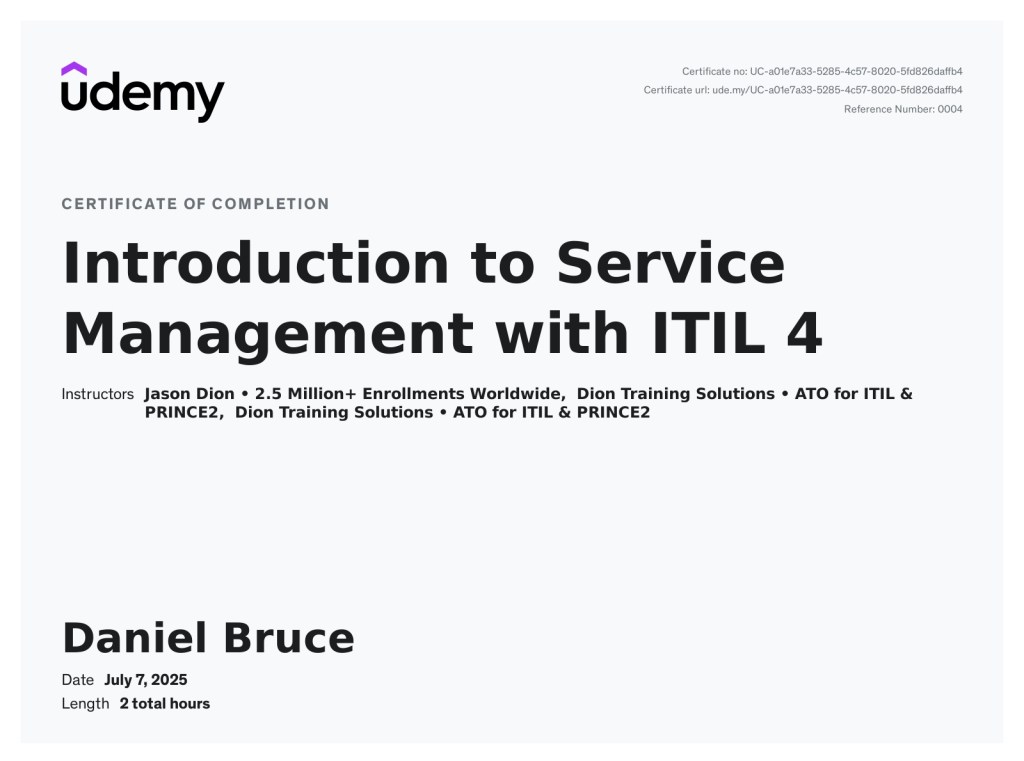
Udemy Course
I also completed a Udemy course titled Introduction to Service Management with ITIL 4 taught by Jason Dion.
This course reinforced key concepts and helped prepare me for the structure and terminology used in the certification exam.
Practice Exams
Practice exams were one of the most valuable tools for preparation. They helped me:
- Identify weak areas
- Understand exam style questions
- Improve speed and confidence before taking the official exam
Repeated practice testing made a significant difference in understanding the exam format.
Key Concepts from the ITIL 4 Framework
During my preparation, several ITIL concepts stood out as especially important.
The Service Value System (SVS)
The Service Value System represents how all the components of an organization work together to deliver value through IT enabled services.
The SVS includes:
- Guiding principles
- Governance
- Service value chain
- Practices
- Continual improvement
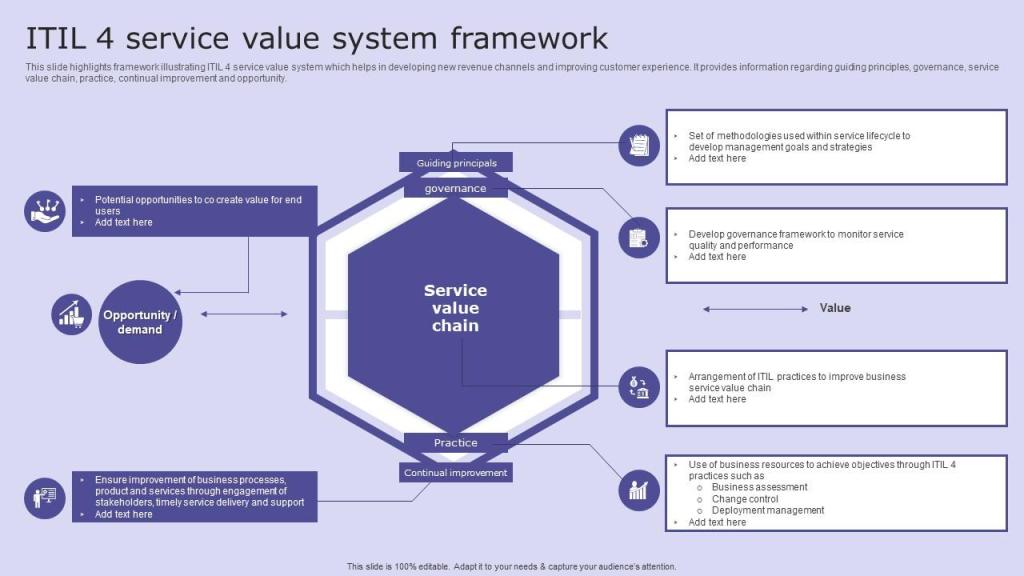
The ITIL 4 Service Value System (SVS) explains how all the components of an organization work together to deliver value through IT services. The framework connects guiding principles, governance, service value chain activities, practices, and continual improvement into a single system that transforms demand and opportunities into value for customers and stakeholders.
Key Components of the ITIL Service Value System
Guiding Principles
Best practices that guide decision-making and organizational behavior when delivering IT services.
Governance
Ensures that organizational direction, policies, and compliance requirements are followed.
Service Value Chain
The operational model used to create, deliver, and improve services through activities such as:
- Plan
- Improve
- Engage
- Design & Transition
- Obtain/Build
- Deliver & Support
Practices
A collection of organizational resources designed to perform work and accomplish objectives.
Continual Improvement
A structured approach for identifying opportunities to improve services, processes, and workflows.
These elements interact to ensure that organizations consistently deliver value through their services.
The Service Value Chain
The ITIL 4 Service Value Chain represents the core operating model used to create, deliver, and continually improve IT services. It transforms demand and opportunities into value through six interconnected activities: Plan, Improve, Engage, Design & Transition, Obtain/Build, and Deliver & Support. These activities allow organizations to respond to customer needs, manage services efficiently, and continuously improve outcomes.
Short explanation you can place in your post
The Service Value Chain is a key part of the ITIL Service Value System (SVS). Each activity plays a role in delivering services to users:
- Plan – Aligns the organization’s strategy and direction with service delivery.
- Improve – Continuously enhances services, processes, and practices.
- Engage – Interacts with stakeholders and manages customer relationships.
- Design & Transition – Ensures services meet expectations before deployment.
- Obtain/Build – Develops or acquires service components.
- Deliver & Support – Provides services and ongoing operational support.
Together, these activities help organizations deliver consistent value while adapting to changing business needs.
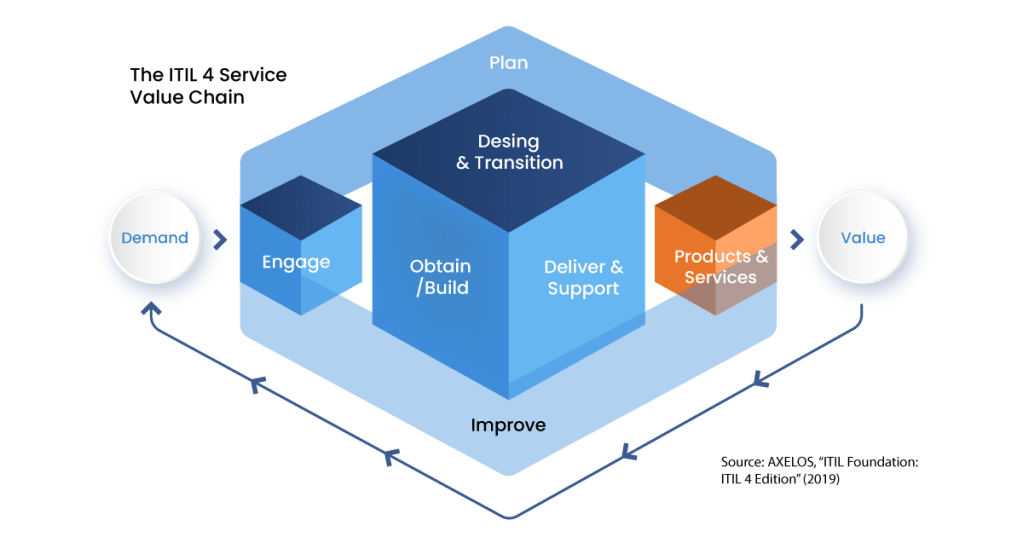
The diagram in the study guide visually demonstrates how these components interact within the Service Value Chain for the Service Value System.
The Four Dimensions of Service Management
Another important concept in ITIL 4 is the four dimensions of service management, which ensure a balanced approach to delivering IT services.
These dimensions include:
- Organizations and people
- Information and technology
- Partners and suppliers
- Value streams and processes
Together, these dimensions help organizations evaluate and manage their services holistically.
Why ITIL Matters for IT and Cybersecurity
Although ITIL is often associated with IT operations and service management, it is also highly relevant to cybersecurity and infrastructure management.
Strong service management practices help organizations:
- Maintain reliable IT systems
- Respond effectively to incidents
- Manage risk
- Improve operational processes
- Align IT services with business needs
For cybersecurity professionals, understanding service management frameworks helps support:
- incident response workflows
- change management processes
- risk management strategies
- governance and compliance
These operational structures are critical in real-world enterprise environments.
Lessons Learned While Studying for ITIL 4
Preparing for the certification reinforced several important ideas about IT operations and service delivery.
One key takeaway is that IT services should always focus on delivering value to users and organizations. Technology alone does not create value, but effective management and continuous improvement are essential.
Another important concept is the idea of continual improvement, which encourages organizations to constantly evaluate and enhance their services rather than treating IT systems as static.
This mindset applies across many areas of IT, including cloud infrastructure, cybersecurity, and system administration.
Final Thoughts
Passing the ITIL 4 Foundation certification exam was an important milestone in my journey to build a strong technical and operational foundation in IT.
While many certifications focus strictly on technology, ITIL emphasizes the processes, frameworks, and management practices that allow technology to deliver real value.
As I continue developing my career in cybersecurity and IT infrastructure, understanding service management frameworks like ITIL will help me better understand how technology supports business operations and how teams collaborate to deliver reliable services.
Next, I plan to continue expanding my knowledge in areas such as:
- cloud infrastructure
- cybersecurity frameworks
- identity and access management
- IT governance and risk management
- Project management
Continuous learning is essential in the technology field, and achieving this certification was an important step forward. I plan to look at taking more ITIL certifications like this one if possible. I believe it is essential to building a strong understanding of how business operate and to deliver better skills in a workplace.
 Danny Bruce Blog
Leave a comment