In forging my next career path, I confidently am exploring into cybersecurity programs and found my ideal fit at Western Governors University. I am excited to share that I will be enrolling in their bachelor’s degree program in cybersecurity eventually. My journey into the cyber domain begins with engaging modules from Hack The Box and TryHackMe. Then to successfully earn the CompTIA A+ Certification which will reward me 8 credits for the WGU bachelors program in cybersecurity. Below, I have listed some of the foundational modules I completed with Hack The Box and TryHackMe.
My first Hack The Box module taught me how to use the platform.
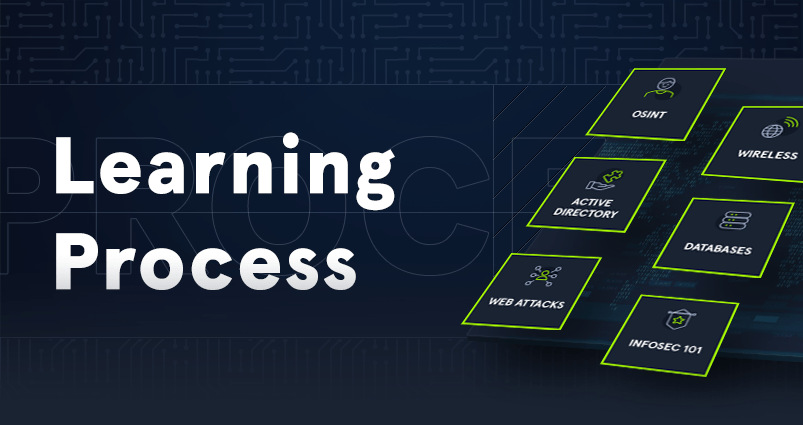
In this module, I learned to think differently, enhancing my learning effectiveness for these particular modules.
In this Module, we discussed strategies for organizing our preparations for penetration tests, which enhance efficiency and allow for further optimization.
Linux is crucial in cybersecurity, serving as the foundation for many servers and providing various options for security professionals. This module outlines the basics of the Linux operating system and terminal, covering topics such as permissions management, Linux structure, shell usage, navigation, file and directory management, administration, and service management.
The Linux Fundamentals taught key skills with Linux. I have used Kali Linux and Unbuntu in the past and still have these windows distros in a virtual machine on my computer. These modules are essential for learning the basics of cybersecurity. The time that was put into these 4 modules are 11.5 hours.
Careers in Cyber
Learn about the different careers in cyber security. Some roles consist of Security Analyst, Security Engineer, Incident Responder, Digital Forensics Examiner, Malware Analyst, Penetration Tester, and Red Teamer.

Training Impact on Teams
Discover the impact of training on teams and organisations. In this module it teaches you the importance of training and how to train efficiently.
Pentesting Fundamentals
Learn the ethics and methodologies of penetration testing (pentesting), which involves simulating attacks using the same techniques as malicious actors to assess and strengthen security defenses.

In these modules I learned roles within cyber and keys in the industry. The time that was put into these 3 modules was around 1 hour and 30 minutes. For my CompTIA A+ training, I used lectures from Dion Training Solutions on Udemy, took notes, completed practice exams, and studied extensively in exam preperation. This certification will be my start in acquiring a IT job to develop skills and build a resume for a role in the cybersecurity world.
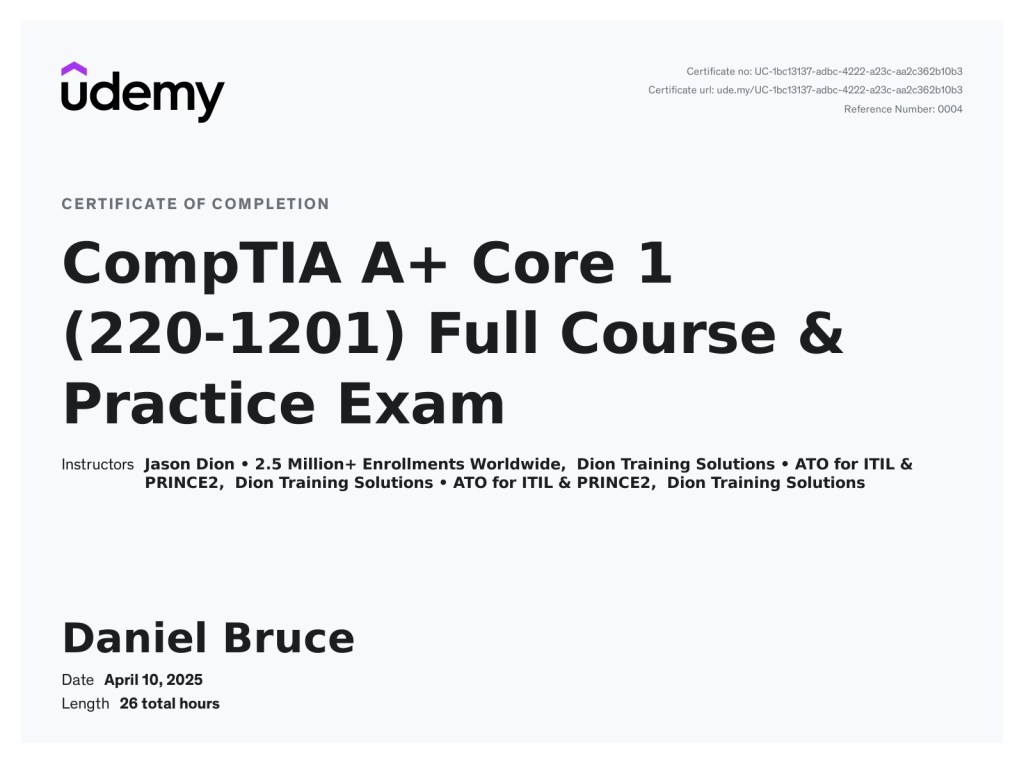
The CompTIA A+ Core 1 (220-1201) certification course provides essential knowledge and practical skills for IT support roles, including hands-on experience in hardware and software management. It serves as a comprehensive pathway for those starting their IT careers or validating their skills.
The CompTIA A+ Core 2 (220-1202) Certification Course prepares IT professionals for the globally recognized CompTIA A+ Core 2 exam, covering essential IT fundamentals like operating systems, security, and troubleshooting through hands-on labs and expert-led instruction.
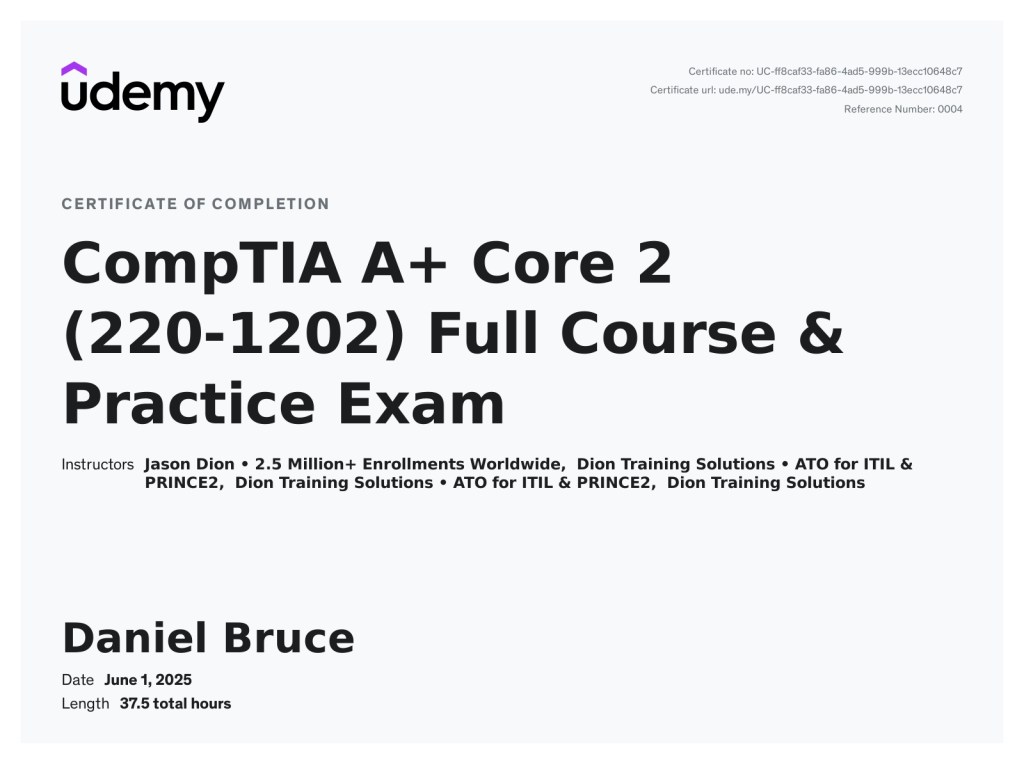

Here is my CompTIA A+ Certification.
The core 1 A+ lectures were 26 hours and core 2 A+ was 37.5 hours of information. In my next blog post I will talk about the my next actions torwards a career in cyber security. I will cover my next two certifications, the next few modules that I have done in hack the box, labs I have been working on in hack the box, other cyber classes, and learnings I have been working on.
 Danny Bruce Blog
Leave a comment